This morning the Rock Auto monthly digital newsletter arrived in my inbox (a short but entertaining newsletter, BTW), and a feature dealing with torque wrench extensions caught my eye.
The issue discussed is that when your torque wrench can't reach or needs an adapter for a specific fastener, you may need to adjust the torque setting to compensate…if the adapter effectively lengthens the tool. However, if you can use the adapter at 90°, the torque remains unaffected. From the article:
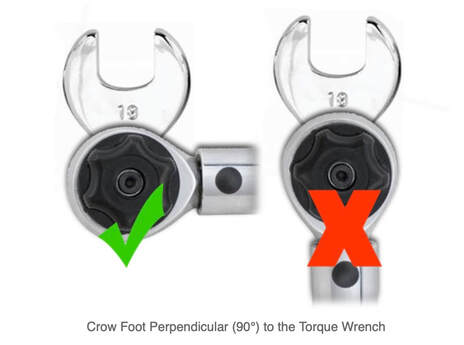
"The torque setting on a torque wrench is based on the distance from the socket to a spot on the handle. If an adapter is put on so it lengthens the torque wrench (parallel with the torque wrench) then the tool becomes a longer lever that applies more torque than the setting on the wrench. For example, the torque wrench may be set to 30 ft-lbs but the crows foot sticking straight out the end of the wrench (see above illustration) may actually be applying closer to 35 ft/bs.
To avoid applying more torque than the wrench setting, put the crow foot on so it is perpendicular (90°) to the torque wrench. This will avoid changing the overall length of the torque wrench and maintain the accuracy of the torque setting."
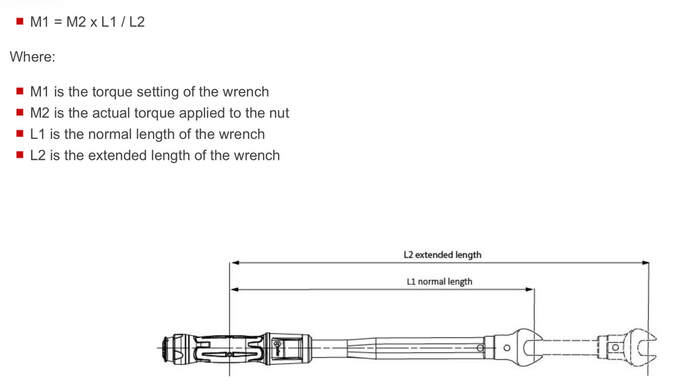
However, the 90° tip isn't always possible. If not, here's a formula to help figure the compensated torque setting, shown below. As an example, if our normal length of the torque wrench (L1) is 15" (measured from the center point of your hand placement) and our extended length with the adapter (L2) is 20", we divide 15 by 20, giving .75. Then multiply our torque spec (M2), let's say 30 ft/lbs, by .75, resulting in our amended torque setting of 22.5 ft/lbs (M1), resulting in 30 ft/lbs at the fastener.
I don't often have the occasion to use adaptors, but this is the correct way to compensate if needed.
The issue discussed is that when your torque wrench can't reach or needs an adapter for a specific fastener, you may need to adjust the torque setting to compensate…if the adapter effectively lengthens the tool. However, if you can use the adapter at 90°, the torque remains unaffected. From the article:
"The torque setting on a torque wrench is based on the distance from the socket to a spot on the handle. If an adapter is put on so it lengthens the torque wrench (parallel with the torque wrench) then the tool becomes a longer lever that applies more torque than the setting on the wrench. For example, the torque wrench may be set to 30 ft-lbs but the crows foot sticking straight out the end of the wrench (see above illustration) may actually be applying closer to 35 ft/bs.
To avoid applying more torque than the wrench setting, put the crow foot on so it is perpendicular (90°) to the torque wrench. This will avoid changing the overall length of the torque wrench and maintain the accuracy of the torque setting."
However, the 90° tip isn't always possible. If not, here's a formula to help figure the compensated torque setting, shown below. As an example, if our normal length of the torque wrench (L1) is 15" (measured from the center point of your hand placement) and our extended length with the adapter (L2) is 20", we divide 15 by 20, giving .75. Then multiply our torque spec (M2), let's say 30 ft/lbs, by .75, resulting in our amended torque setting of 22.5 ft/lbs (M1), resulting in 30 ft/lbs at the fastener.
I don't often have the occasion to use adaptors, but this is the correct way to compensate if needed.
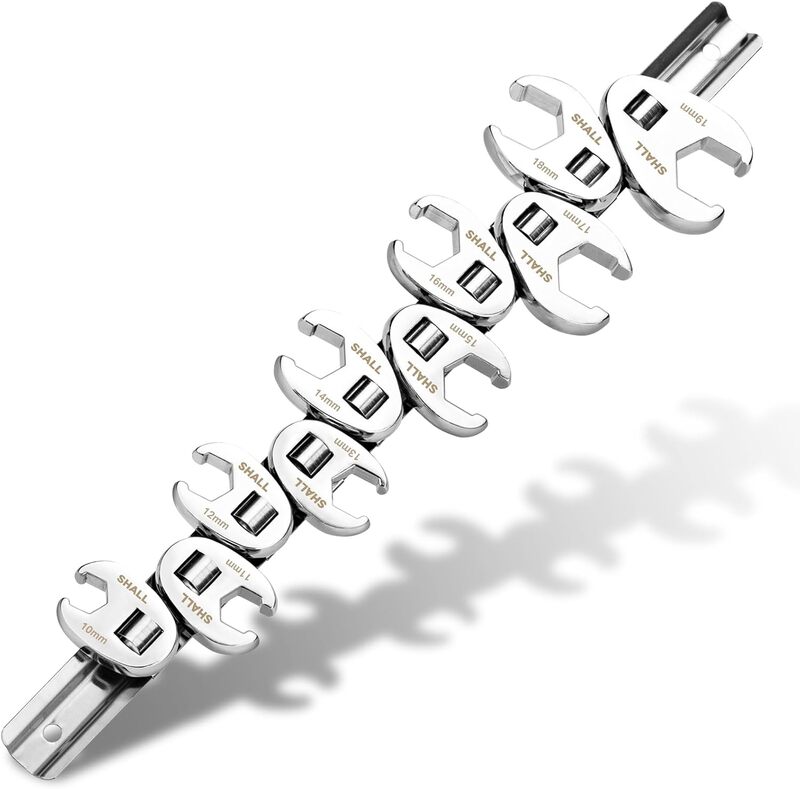
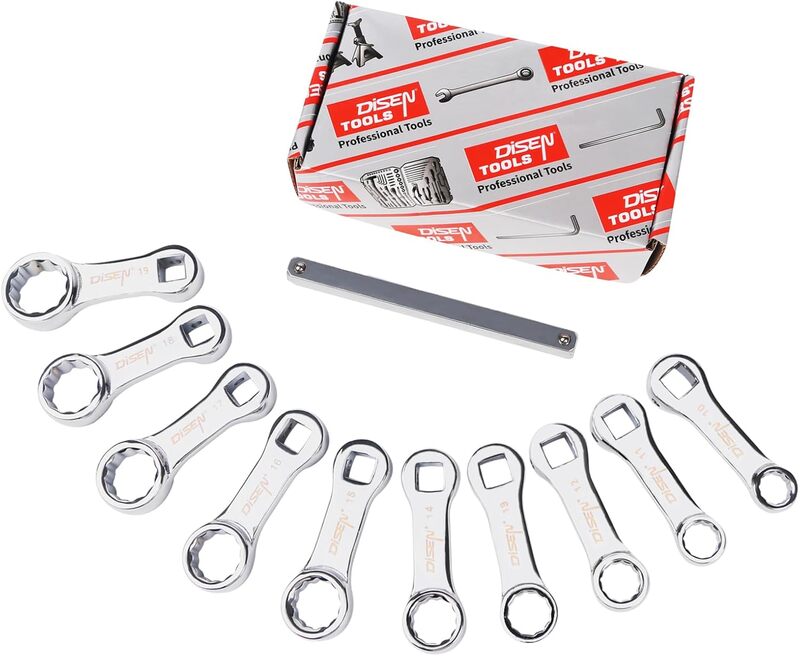
Speaking of adapters, here's a couple of examples I found on Amazon; click on the images for links.
 RSS Feed