|
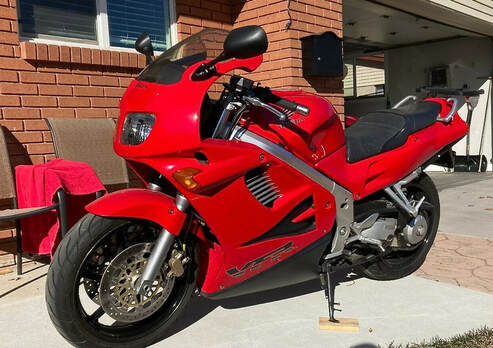
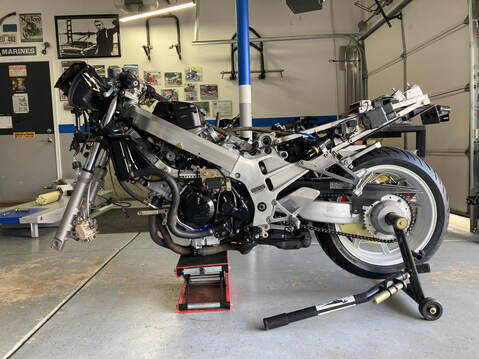
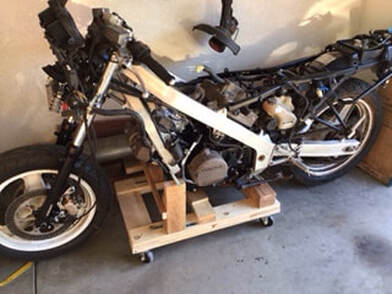
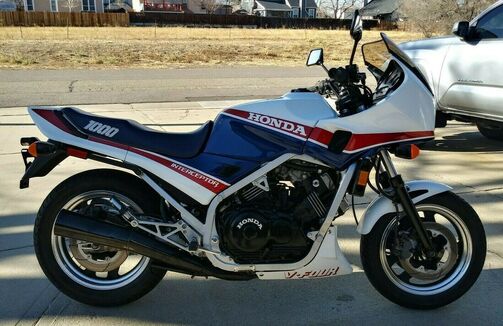
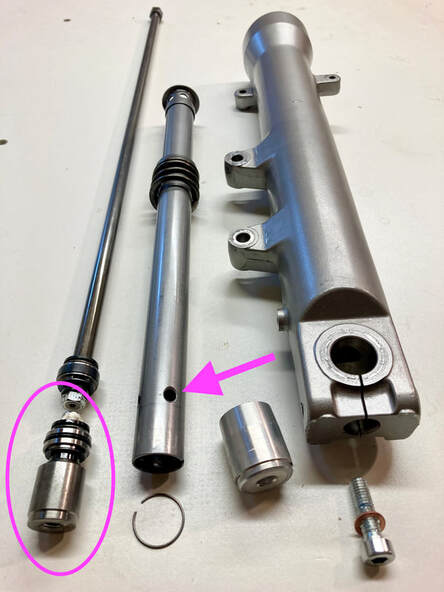
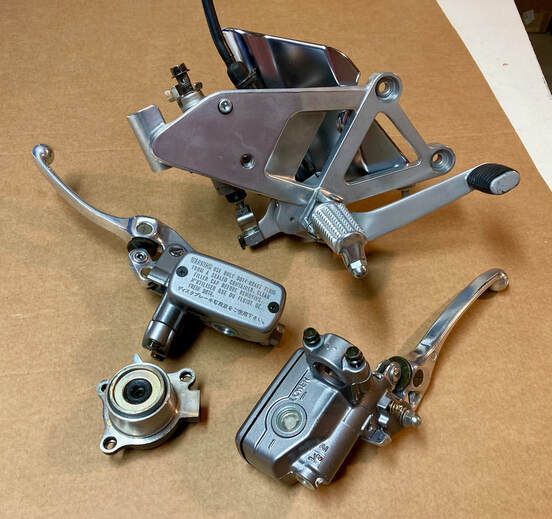
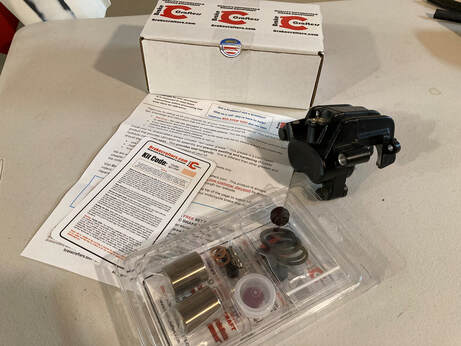
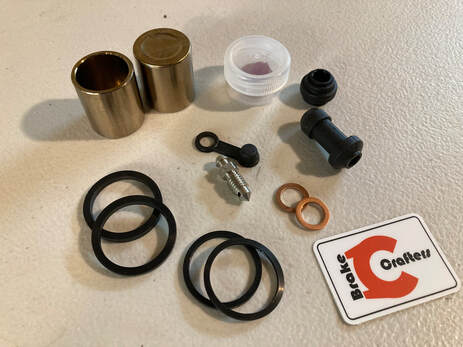
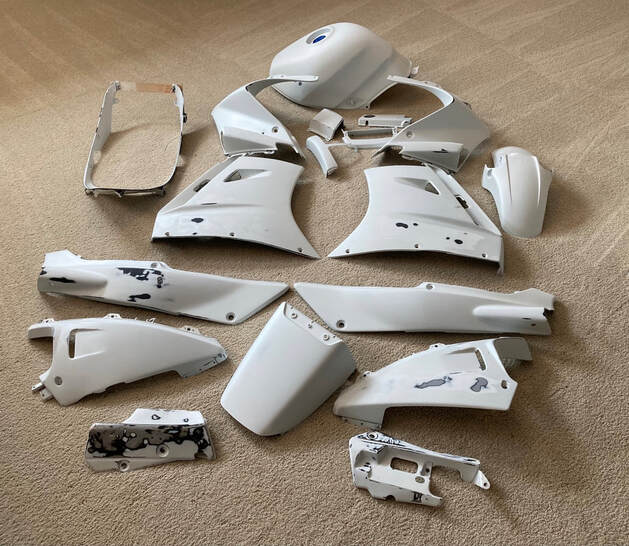
After many hours of cleaning, repairing and sanding, the 18 individual pieces from Project 37 are finally ready to be delivered to the painter. Fortunately, the wheels cleaned nicely, again with hours of detailed labor, but being able to mount the bike's original wheels is a good thing. I have a reproduction decal set on hand, which I will apply to the fresh color and then back to the painter for clear coat. We have settled on a Chrysler pearl paint code, which we will tweak for the best match to the original Pearl Crystal White. Steve at Steve Nick Customs, Woodstock, IL, is the paint artist for this project.
0 Comments
The 2022 Mecum Las Vegas auctions concluded this past weekend. I had hoped to be there with my 1112-mile 1986 VFR700 but a smart buyer grabbed it from me last Fall, so I was left as an internet spectator. Here's the results listed for the various V4 models crossing the block this year. 1986 VFR750F Sold: $7700 This RC24 shows 21,371 miles and presents well. Mecum's typically uninformative description states simply, "running condition." The bike appears to be in mostly original condition with damage-free cosmetics, period correct Kerker slip-ons and Fox shock. The passenger seat cowl is present but the windscreen molding is missing. An above average example with a bit less than average miles. The selling price indicates a general rise in second-gen values — and it's about time. 1984 VF1000 F2 Sold: $2420 The auction listing is a little confusing on this Euro-spec VF1000. It's listed as an '84 but the description states that the fully-faired F2 was introduced after the '85 model year. In any case, this is a unique take on the big-block VF in the U.S. and sports the extra fairings, a second radiator and twin headlights. This example looks to be in average condition with 41,842 miles and an aftermarket seat. 2001 Magna 750 (VF750C) Sold: $2200 This V4 power cruiser stayed in Honda's lineup until 2003 and featured an internally-modified 750cc V4 tuned for mid-range power with 5-speed transmission. This example shows beautifully with only 8043 miles on the odometer. It's selling price seems to indicate the general lack of interest in the mid-displacement cruiser market. 1985 VF500F Sold: $3300 This mini-'ceptor is represented as an original survivor and certainly shows the appropriate patina, all Armor-All-ed up for the auction. Showing 10,530 miles, I would call this bike an average example, and the seller should be very pleased with the sale price. 1992 VFR400 (NC30) Sold: $13,750 Here's a beautiful example of the final-year VFR400, cleverly coded by Honda as the NC30 to channel it's famous sibling, the RC30. This model was never offered in the U.S. market but have become a desirable (and now legal) import for collectors and lovers of small displacement point & shoot sport bikes. This one shows 11,657 miles and proudly displays its classic 90's livery. Very nice. 1988 VF1000 FE Sold: $5170 This Euro-spec VF1000 is designated "FE" and is a lovely survivor despite its 64,468 kilometers. There's some expected patina including some left-side muffler rash and the mirrors are not original to the model. This is a very unique bike here in the U.S., and a pretty cool alternative to the over-priced and less-friendly "R" model. 1982 V45 Sabre (VF750S) Sold: $1980 This may be the buy of the weekend — a first-year V4 Sabre in very original condition. No word on the miles (or anything else) but this appears to be a well-preserved example. Aluminum corrosion is an issue with the early VFs, but this one doesn't look too bad, and the irreplaceable mufflers are intact. A lot of motorbike for under $2000. 1987 VFR400 (NC24) Sold: $7700 The NC24 is the second generation of the VFR400 series ('87-88) and introduced the 8-spoke rear wheel and single-sided Pro-Arm swingarm to the model. No mileage listed, but this example is exquisite in one of the three color schemes available this model year. Well bought and well sold. 1982 V45 Magna (VF750C) Sold: $2750 Another first-year example of the V4 lineup, the Magna was Honda's response to the Japanese cruiser trend of the 80's. This example is mostly original, is all shined up and shows 18,580 miles with muffler rash on both sides. These are not sought-after models and I think the seller should be pleased. 1985 VF1000R Sold: $12,100 The "R" model VF1000 was sold in the U.S. in 1985-86 but introduced in Europe in '84. A complete redesign of the "F" model, the "R" brought gear-drive cams and many performance upgrades. It was also 85 pounds heavier and was less comfortable, a nod toward its intention as a homologation bike for endurance racing, which never materialized. Still, the "R" remains a desirable classic, and there's no denying the punch delivered by the big-block V4. This bike indicates 27,900 miles and is said to be "highly original." If that's in fact the case, it's an exceptional example and the selling price reflects it. 1984 VF1000F Sold: $7700 Wow, what a beautiful example of the single-year VF1000F. Belying its 38,892 miles, this example sparkles in its classic red/white/blue livery. Looking over the photos, I have to believe this one has had a cosmetic restoration. The listing also states that the engine was rebuilt in 2017. The selling price is the highest I've ever seen for the model, and hopefully, it signals an uptick in value for the traditionally underrated "F" bikes. 1984 V65 Sabre (VF1100S) Sold: $1870 Another great buy, this big-block V65 is represented as original and unrestored. These bikes were stoplight brutes, could smoke just about any comers and were direct competitors to Yamaha's V-Max. Available only in 1984 and '85 with its trendy square headlight and long fork styled for a chopper-esque look. This one shows 32,023 miles and is going to bring back some memories for very little money. As I progress through the refurbishment of Project 37, a 1993 VFR750, one of the items at the top of the checklist is a valve clearance check and adjustment. Beginning in 1990, the VFR's valve adjustment is accomplished via the "shim-under-bucket" arrangement whereby replaceable shims of varying thickness are exchanged to achieve the recommended clearance, also referred to as "lash." This design provides a very positive mechanical setting which is able to survive high-RPM operations without the threat of "spitting" out a shim as can happen with a "shim-over-bucket" arrangement. Honda must have thought that our high-performance, high-revving engines deserved this design, though interestingly, the earlier generation VF/VFRs seemed to have gotten by with the simpler screw & locknut approach. In fairness, those earlier systems required old-fashioned rocker arms for valve actuation which are more complex and heavier, adding reciprocating mass and, likely, high RPM flexing. But, that earlier design makes our life easier when adjustment time comes about. In any case, owners of 1990+ machines will need to set aside more garage time (or expect to pay a shop more) in the event their valves are in need of clearance adjustments, which likely leads to this task being put off or outright ignored as part of a normal maintenance regimen. Of course, that's understandable when an owner realizes that, in order to replace a shim, the appropriate camshaft needs to be removed from the cylinder head…and there's four of 'em. So, if you're confident in your wrench-turning abilities, here's a video showing the steps involved in accessing the area for the clearance checks and removing/installing the cams, if necessary. In this case, all eight valves of the rear cylinders required adjustment along with three of the front intakes and none of the front exhaust. So, three of the four cams required removal. The second video shows the math exercise required to select the correct replacement shims. I wish I knew how to make math interesting but, alas, I don't. NOTE: Once I gained access to the valve covers this entire operation took me about 2.5 hours of labor plus the better part of a week waiting for my local dealer to provide the three shims I didn't have on hand. There should be no additional parts needed beyond the required shims, though this is a perfect opportunity to replace the spark plugs. As noted in the shims video, the Haynes service manual is the more thorough guide for this operation. Carbs From December, 2015 The old carburetor vs. fuel injection debate is long dead. "Fuelies" may have had a rocky start with the old mechanical automotive systems, but the EPA writing was on the wall and technology won out — for the better. The first mass-produced motorcycle injection system appeared on the 1980 Kawasaki Z1000 Classic, and our VFRs joined the game in '98 with the VFR800FI. But those of us who play with old bikes still fumble about with carbs. I should create a T-shirt which states, "Still Plays With Carburetors." It's often interesting to disassemble a set from the latest project bike to see what mischief has been wrought by previous fiddlers. Even nostalgic types have to admit that the new-generation performance tuning via digital mapping is more precise, effective and much, much easier than old-school trial & error with needles and jets. It's also a natural approach for this digital generation. But we're stuck with our carburetors and I will say that there's a certain satisfaction in getting all the parts and ports to align and end up with a sweet-running carbureted V4. Or maybe I'm just old. Click on image for the VFRworld.com link. What: 2000 VFR800 FI Where: Southwest Florida Why: Exceptionally well-kept 5th-Gen Price: Asking $5000 1998-2001 VFR fans will tell you in no uncertain terms that theirs is the best generation of Interceptor out there. And owners of the one-year Pearl Shining Yellow bikes may be the most vocal. They all have a point, of course. Sitting in the sweet spot between the gear-drive cam design of the previous generations and the new age chain-drive VTEC models, the fuel injected 782cc V4 got a few tweaks for the 2000 model year. These included an updated EFI system, oxygen sensors and the "fast idle" lever deleted, while all 5th-gen bikes got Honda's new CBS linked braking system. This two-owner example presents beautifully despite showing nearly 29,000 miles. Obviously well cared for with full maintenance records and a few nice extras: Bar risers, alarm system, aftermarket windscreen and color-matched Corbin seat. The $5000 asking is at the high end, but I'm thinking you get what you pay for here. If yellow is your color, you'd be hard pressed to find a nicer example. While in the process of dismantling the various systems on Project 37, a 1993 VFR750, I came upon this science experiment inside the clutch master cylinder. This is exactly why there's a universal recommendation to flush brake fluid every two or three years. Yes, this will clean up with a water scrubbing but the situation is the same downstream in the lines and clutch slave cylinder. In fact, when I attempted to drain the fluid via the slave's bleeder valve it wouldn't even pass this crud. Flushing/bleeding your hydraulics isn't difficult, costly or time-consuming, but, if allowed to reach this point, it's just the opposite. This will require a complete system disassembly, cleaning, new master and slave seals and ideally a hydraulic line replacement, which we're planning in any case. If you presented this to a shop you're facing hundreds of dollars in parts and labor. Flushing your own systems costs a $4 container of brake fluid and 30 minutes of garage therapy. Flush your fluids! It's that time of the season again: Today marks my unscientifically-determined mid-point of winter for us occupying the northern half of this little rock hurtling through space. I always like to pause and look over a few summer riding videos as a reminder that this too shall end and return us to the road. I think that I've featured this video in the past but it's worth another look — here we have Nurburgring Biker making a fast lap of the Nordschleife (North Loop) of the famous Nurburgring circuit nestled in the Eifel Mountains of Germany. He's riding his 2006 VFR800 VTEC in nearly stock configuration, including suspension, with Michelin Pilot Road 3s, an aftermarket slip-on and EBC brake pads. I saw around 240 kph on the straights, which translates to around 150 mph. Enjoy! While doing a bit of carb tuning for a client, I was giving this 1987 VFR700 F2 a once-over and discovered that the turn signals were, let's say, reluctant to do their job. The right side signals were sluggish and the left were away on vacation. The signals all share common electrical components, so if one side are working and the other not, then items like the flasher and fuse are not the problem. I find that an issue like this is often in the handlebar switch assembly; likely just dirty contacts. That proved to be the case here. When I split the switch case (below, left) I can see that the old grease is gummy and dirty. This is a simple mechanical device — moving the pivoting switch lever left or right moves the opposite end left or right. When we remove that lever assembly (below, right) we see that that lever is actually moving the white-colored sliding plastic block right or left (yellow arrows). That movement makes electrical contact on the face of the black-colored plastic block (pink arrow) which directs the electrical current to the right or left turn signal circuits. When centered, as in the photo, no electrical contact is made. Our problem is that the contacts, which are exposed to dirt and humidity, are no longer making positive contact. The solution is to spray the contact area with electrical contact cleaner and then coat with a bit of dielectric grease. I also give the switch lever a similar treatment, which makes the switch action smooth and crisp, just like when new. Carefully reassemble the components with their tiny screws, check that the choke cable is in good condition and button everything back up. NOTE: This task is completed with the switch left in place on the handlebar. As our vintage bikes' parts and pieces become less available I find it increasingly necessary to search farther afield for those bits. Case in point, the plastic infill panels for the second-gen Interceptor. Finding these elusive panels in useable, undamaged condition has become nearly impossible. So it was that, when I saw this set pop up on eBay a few weeks back, I clicked the buy-it-now button with little hesitation.
All the way from Lithuania. With no "round-gauge" model available for the European markets, these panels will only fit the U.S.-spec F2 bikes. No worries, as there's something like twice the number of '86-87 700 F2s in America as there are '86 Fs. These will sand and polish to an acceptable level, or possibly be painted for a restoration project. They even included the rubber side gaskets. Thanks, eBay! |
THE SHOP BLOG
|


RSS Feed