With three active projects going, I had no problem making time for this one. Our granddaughter, Kysa, turns five next month and it's time to graduate from her little electric scooter to this larger, faster trike — in pink, of course. Patti and I call our Victory tourer "Big Girl," so this one has been christened "Lil' Girl."
1 Comment
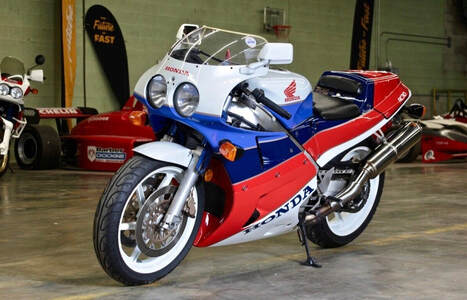
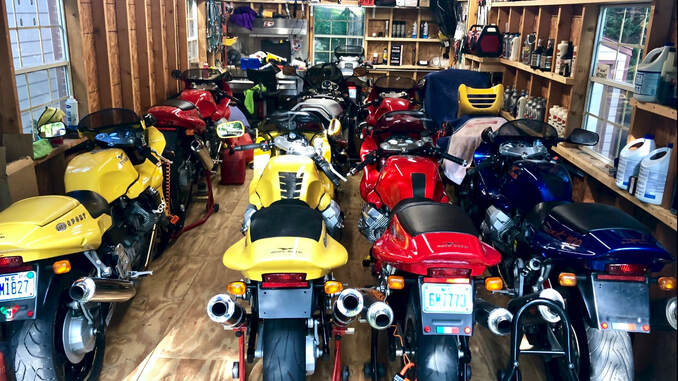
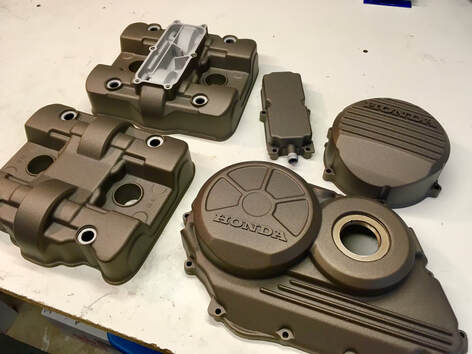
Click on image for the BaT link. SOLD: $4665 This well-presented 1984 VF1100S V65 Sabre recently sold on Bring A Trailer for an impressive $4665. The big V4 shows 32,000 miles and was sold by Ultra Motor Source in Manasha, WI., a small shop with a big internet presence. This one shows very well, very original and looks ready to ride. Well sold. I always enjoy BaT listings for the informative and entertaining comments section. Click on image for the Craigslist listing. What: 1987 VFR700 F2 Basket Case Where: Fredericksburg, Virginia area Why: Fresh crate motor included Price: $800 I've purchased a few VFR parts bikes and partially assembled (disassembled?) projects in my time, and here's another one that I'm certain I couldn't pass up if it were closer to home. Why? 'Cause there's a "motor still in the crate." Now that's something we don't see everyday. Our seller states that the bike was wrecked in 1990 and it has sat in this condition since. He/she adds that there's "countless" NOS parts included along with Candy Wave Blue bodywork, though I don't see the headlight fairing pictured...or forks...or wheels. Still, the remains seem essentially untouched and complete. There's probably not many miles accumulated in its short riding history, so if the frame is straight this would make a great winter project with a twist — a zero-mile engine in a 33-year old moto. Click on image for the BaT link. What: 1990 VFR750R RC30 Where: Highwood Illinois (Chicago) Why: Collectible example Price: Live-bid auction @ Bring A Trailer This lovely RC30 is a U.S. import showing only 1600 miles, and offered by a long-time car and bike collector. In his words: "Whatever I collect I always try to get the best. I do believe that the RC30s in general will be like the GTO Ferrari of the future for motorcycles in reference to their potential to appreciate exponentially." The bike is completely original, serviced and ready to ride, according to the seller. This is in my 'hood, so if a serious bidder would like a personal inspection, I'd be happy to help out. Auction ends Wednesday. Click on image for the eBay link. What: 1996 RVF400 Where: Hendersonville, TN Why: A useable gray-market RVF Price: $8950 or Make Offer I found this jewel on Bike-urious.com. This is the final-year model, available only for the Japanese market, and is distinguished by its very 90's one-year only paint scheme. The RVF400 is often called the little brother of the RVF750R (RC45), and its 399cc V4 is rated at 59 HP at 13,000 RPM. The model represents the final evolution of the earlier VFR400 (NC30). This example shows about 7400 miles, not unusually low for a model designed for short back road fun rides as opposed to traveling any distance. There's a few imperfections and some vinyl wheel stripes added, so this one could actually be used in the real world without undue fear of adding miles or the occasional rock chip. The price is top tier, but the seller is flexible. After sitting unused for ten years, Project 28 came to me with a moderate amount of surface rusting on the fuel tank interior. As they say, rust never sleeps, so for the future health of this tank I want to remove the rust as best I can. There's lots of techniques, both commercial and home-brewed, but my first go at this is always a good vinegar soak. White vinegar is cheap, easily available and is a fairly mild acidic (5-20%) so it won't hurt painted or rubber items, as long as it's wiped clean and not allowed to sit for long periods. If possible, I source white vinegar as opposed to distilled white vinegar, as the non-distilled is stronger, but during these days of thinly-stocked store shelves I was only able to find the quantity I needed (5 gallons) in distilled; $1.79 per gallon. I read on the interwebs that you can fortify the acidic strength by adding a cup of salt per gallon, so I gave that a try. I have no way of knowing if it helps, but I had good results in any case. After plugging the fuel line outlet, I sit the tank in a large tub to catch any potential leaks or overflow, fill to the top, close the filler cap (or tape the filler opening, if the cap is removed) and...wait. Being a mild acid, vinegar will be slower-acting than more aggressive acids, so it may need a few days of soaking. Each day I peek inside the filler with a flashlight til it's evident that the rust has dissolved. The drained vinegar can be reused or simply discarded down the drain. I leave about a gallon of vinegar in the tank, then add a few handfuls of something loose to help scrub the remaining rust loose. I use short drywall screws, nuts, bolts or a length of light chain. Next comes my upper body workout — hold the tank and agitate in every direction. Then drain into a large tub (photo right) through the fuel sender hole. Next, shake the screws out. TIP: By resting the tank on its back, any remaining items can be retrieved through the fuel sender hole with a magnet. Then a thorough flush with the garden hose through the top and bottom openings till the water runs clear. At this point I take the opportunity to blow-back through the fuel petcock to clear the lines. Finally, to prevent flash rusting of the bare metal, I add some sort of oil-based coating. I like Marvel Mystery Oil, cylinder fogging spray or WD-40. Anything to displace the remaining water and coat the bare interior metal. Wipe the exterior, install the sender with a fresh o-ring gasket, and this tank is ready to use. And to preserve my nice, fresh tank in the face of today's alcohol-laced gasoline, I religiously use a fuel treatment. My favorite is Star Tron. Why? 'Cause it will stabilize fuel for two years (!) and it will disperse water — did you know that ethanol is hygroscopic? That's science-speak for its tendency to absorb water, and water mixed with fuel is never a good thing. Water is heavier than gas, so if allowed to separate from fuel, it sinks to the bottom of the tank, creating rust, slowly chewing a hole in your fuel tank. Star Tron even helps dissolve gummed and varnished deposits in your fuel system. There's other treatments out there, like Sta-Bil, but this stuff works; it's cheap, it's available at Walmart, and all you need is an ounce added to your bike's tank to afford you peace of mind while your bike waits contentedly in its corner of the garage. Please. Use. This. Stuff. Click on image for the Bike-urious link. In this morning's inbox was this feature listing from Bike-urious.com. Usually featuring odd, unusual or just curious moto models from around the globe, I was pleased to see a mention of the 4th-gen Honda VFR750. The featured bike is a nice example, if a bit average, but the text helps to explain its place here: "Reliable, practical and possessing the lovely whine of gear-driven cams,"..."this is the kind of machine that people love to live with." So true. This VFR shows 29K miles and is listed for $2200 near Boulder, CO here on Craigslist. Yesterday I was trying to organize my shop space in order to keep track of the various parts and pieces of my three current projects. At some point I realized that I had every 2d-gen U.S.-spec color in the shop at once; Candy Wave Blue, Shasta White/Candy Aleutian Blue/Fighting Red, and Pearl Crescent White. I should probably snap a photo.
Click on image for the C-list ad. My old riding buddy, Butch, passed away nearly three years ago, and I'm now helping his estate deal with his small collection of bikes. The family has decided to sell on his barely ridden 2011 Suzuki DL650 ABS. With an amazing 482 miles, the bike is a real time capsule. An unfortunate garage spill added a few light scratches on the right side fairing cover, but otherwise this one is a showroom specimen. Asking price is $4800. Contact me or click on the image for more information. Last week I was elbow deep into two sets of carbs for a couple of current projects. After stripping a project bike of its bodywork, the first thing I deal with are the carburetors. Shown below is one of the reasons why. These o-rings and bowl gasket are from a bike which sat idle for ten years. Dried and shrunken, there was no way they would have held fuel. In fact, the owner tells me their leaking was the reason the bike was parked all those years ago. (click on an image to enlarge) Here's another reason to check the carbs on your project. This green/gold color is old fuel turning to varnish. When I removed these jets they were clogged with a black, sticky goo. And here's what old gas will do to a slide bore. Despite soaking and gentle prodding, the plastic slide was cracked and ruined as I removed it. The obvious lesson here is to keep fresh, treated fuel in your bike and recycle it often...by riding it! |
THE SHOP BLOG
|


RSS Feed