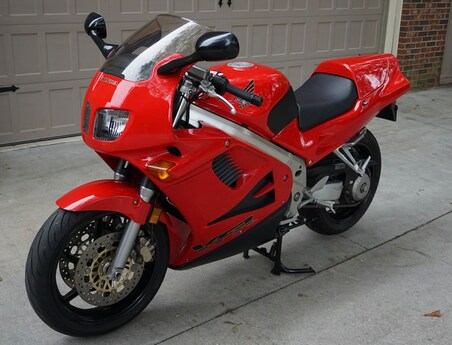
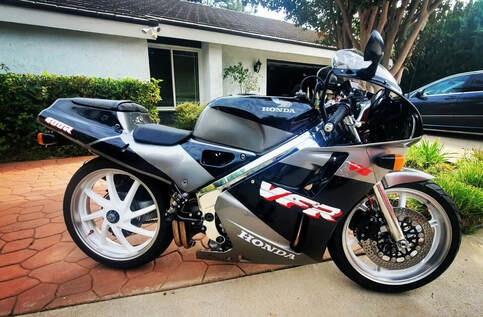
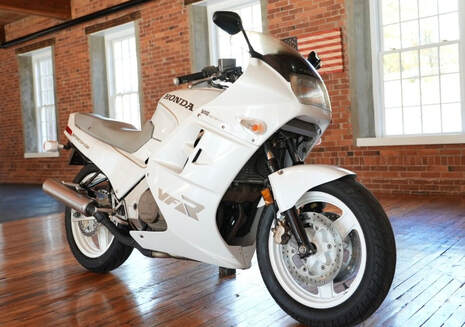
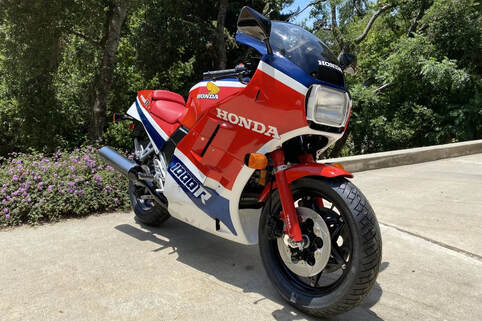
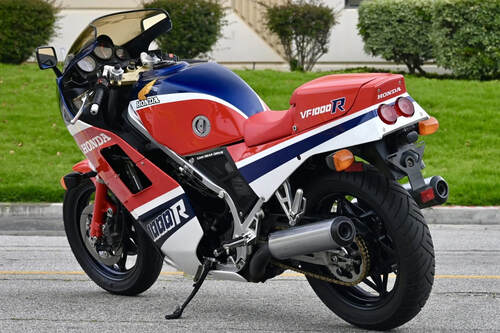
Click on image for the VFRdiscussion.com link The parts are repaired and just about ready for paint. Jay's asking $1200 for the lot plus shipping from California.
Click on the photo for the forum classified link.
|
Click on image for the VFRdiscussion.com link Reader Jay recently contacted me on an unrelated subject but mentioned that he has a set of 1994-97 VFR750 bodywork for sale. The parts are repaired and just about ready for paint. Jay's asking $1200 for the lot plus shipping from California. Click on the photo for the forum classified link.
0 Comments
Hydraulic brake components don't fare well when neglected, which is why manufacturers specify a 2- to 3-year fluid replacement. Unfortunately, "out of sight, out of mind" often prevails so the clutch slave pictured here is more typical of what I encounter in my projects. This was found on Project 41, a 1987 VFR700 F2, which hasn't turned a wheel in over 20 years. The master cylinder and brake line looked the same. Let's try to save this assembly, which will apply to all VFR slave cylinders. It's a simple mechanism, a large piston is pushed outward in its bore by hydraulic pressure from the master cylinder, moving the clutch rod which passes through the crankcase to the clutch basket, separating the clutch plates, which achieves a disconnect between the engine and transmission. Hydraulic pressure is held captive by a single large seal on the piston. All we need to do is clean everything, smooth the piston and bore and fit the fresh rubber seal. (Below) After cleaning with soap & water, I inspect the bore for deep gouges or corrosion, which would prevent sealing, but this one looks useable — the arrow shows the area where the seal actually moves, so that's the critical point in the bore. I begin with a brass rotary brush to remove staining or deposits missed by cleaning and then move on to finger sanding with wet/dry sandpaper, the grit depending upon the condition of the bore and piston. Here. I'm finishing up with 1000-grit. (click on an image to enlarge) Ready for assembly. (Below) After lubricating with brake fluid, I install the main seal being sure that the larger lip faces the spring. Next, the clutch rod seal is pushed into place with the flat side facing outward. Then coat the bore with brake fluid. (Below) Carefully align the piston and bore so that with firm, even pressure the piston slides home. When installing onto the bike, refit the bleeder valve, add a dab of grease into the rod's cavity and fit a new gasket (available from Honda). This little job is complete, and, with regular fluid changes should be good for a few more decades of use. Next up, the master cylinder.
- SOLD - GIVI Touring Windscreen For Sale $75 shipped. I have a used Givi brand windscreen for the 3d-gen Interceptor which I no longer have a use for. Very nice condition with a few imperfections but nothing significant. It might benefit from a polishing but I didn't find it necessary when fitted to my '93. The photos don't show much detail, of course, but this is a nice screen. It measures the same width as OEM but is 3 1/2 inches higher at 20 1/2" with a little flip at the top for airflow and an aerodynamic vent at the bottom to smooth airflow over the top, which works well. It takes virtually all the wind off my torso. I will ship this to CONUS only, deduct $20 for local pickup in Antioch, IL. Here's a few more photos. A few weeks ago, reader Rex contacted me about my possible interest in acquiring his VFR. As it turns out, Rex's story is an interesting and unique one. Rex is British, and back in 1986 he was on the staff of Motor magazine, and as such he became privy to the press introduction of the new 1986 Honda VFR model. Honda made three bikes available to the press and, with the road tests completed, Rex inquired as to the possibility of acquiring one of the test units. An agreement was struck and Rex was given his choice of red, white or blue. His wife, Carol, opined that blue was the fairer of the three and the choice was made. Shown below is that very bike. In 1987 Rex and Carol emigrated to the U.S., specifically Michigan, when he accepted a position with Ford Motor Company. Rex shipped the VFR with his household belongings and somehow managed to wade through the importation process, getting the bike duly registered. So, here is possibly the only European-spec second-generation Honda VFR750 Interceptor legally residing in America. Rex has reluctantly decided that the Interceptor is too tempting a pleasure machine, and made the difficult decision to pass it on the next caretaker. As a partial replacement, he has acquired the Morgan Plus 8 pictured below. By happenstance, my Dad had an identical-appearing Morgan Plus 4 when I was a teen, so I spent much of our time together drooling over the Morgan.
In any event, Patti and I loaded the VFR onto the trailer for the ride home as Rex soulfully watched his old friend leave his life. But its future is bright, as I embark on the journey to find this unique motorbike its new owner. The VFR has just ticked over 18,000 miles and is gleaming in its original bodywork. I will need to address a few cosmetic bits and treat the bike to some fresh tires, but that's about all. Stay tuned. SOLD $8800 After six seasons and great times together, the time has come to move to other interests, so we've made the reluctant decision to sell our baby, a near-mint 2012 Victory Cross County Tour. We purchased the bike for two-up touring Spring of 2018 with 24,000 miles and it now shows 34,725. Our time together has been absolutely trouble-free as we've traveled throughout the eastern U.S. and many more local two- or three-day rides. This bike has had the best of care from three senior owners since new; religiously maintained with only a few thoughtful modifications from original. Never abused, rarely even seen rain, stored inside, detailed after each ride and properly stored over the winter months. The Sunset Red Metallic paint is nearly perfect throughout and literally sparkles in the sun. The original windscreen is clear and scratch-free. The rear tire will be due for replacement next season. The Cross Country Tour was introduced in 2012 as Victory's top-of-the-line touring mount and featured state-of-the-art tech at the time, including: 106 ci V-Twin (106 HP, 106 lbs Torque) ABS Brakes Adjustable Rear Air Suspension Upside Down Forks Cruise Control Heated Front & Rear Seats Heated Grips HID Headlight, LED tail and signals Six-speed Overdrive Transmission Radio (and iPod), Speakers Front & Rear Four adjustable air deflectors Largest luggage capacity for a production bike Modifications include: Gearing lowered via smaller countershaft sprocket for more efficient use of gearing Lloyd's adjustable timing plate for better drivability Lloyd's cleanable high-performance air filter Victory passenger handholds (rare) Raised sidestand foot Extras include: Victory Service Manual Victory Owner's Manual Victory touch-up paint Trunk bag, custom-made, new, never used Bike cover Original countershaft sprocket and tool Maintenance records from my ownership Two keys Hi-res photos here. Shave Cream Intake Caps I don't know how I stumbled upon this idea, but I use it all the time. With the carbs removed on my second-gen VFR projects, I want to protect the intake runners from objects, dirt and water. I began by cutting sections of plastic and zip-tying them over the openings, which I still for other sized carbs, but these Edge brand shave cream covers fit the 2d-gen rubber intake boots perfectly. Simply remove the upper metal clamps and these slip snuggly in place. I can now work around the bike or even wash the area without fear of something finding its way into the engine. (click on an image to enlarge) Bubba's Chain Removal Hack
My Motion Pro chain combination tool both removes and installs rivet-type chains. But if all I need is to get the old junk chain off, then I just reach for my Harbor Freight cut-off tool. It makes short work of this task and making sparks is always fun. Here, Project 41 loses its rusty old drive chain. One is able to accomplish much with a project on the lift or parts on the work bench, but you hit a practical wall when it comes to clutch and transmission checks. The only way I feel comfortable testing those components is on the road. So…I decided to get Project 41, a 1987 VFR700 F2, road ready, if not exactly road worthy, for a short test ride in order to assess the clutch and trans. Beginning with no bodywork, 27-year old tires and a single operating brake (rear), I rebuilt the clutch master and slave cylinders and added a hydraulic line which gave me an operating clutch. Next, I bungeed the instrument pod in place as its mounts are broken. I wanted to add lighting fore and aft but decided it wasn't worth the effort for a 1-mile test ride. I would need a little fuel, of course, so, lacking a better alternative, I zip-tied my fuel bottle to the handlebars with just enough gas to feed the carbs without leaking from the lid. Finally, I needed somewhere to sit so I slid the seat into place, which actually worked okay considering the rear latch wasn't mounted. And off I went to a nearby straight stretch of country road long enough to allow up- and downshifting through all six gears. Success! My contraption worked long enough to determine that the old clutch functions well and the shifting feels fine. Back on the lift to strip it all off the bike — it's not actually ready for those components at this point in time. This test gives me the confidence to move forward with the project. (click on an image to enlarge) P.S. Had I been "noticed" while on the road by the local constabulary I would likely have collected a fistful of performance awards. We live on the edge of our village with open country just blocks away so my plan was to slip away on a lazy weekday afternoon and fly under the radar, so to speak. I gear up, mount the bike, start the engine, click into first gear, and as I begin to let out the clutch…a local police cruiser appears and slows to a stop at the end of the short driveway, the officer looking directly at me. I'm dumbfounded by this turn of events (how would she know what I was up to??) as the officer hails my wife standing next to me, explaining that there's been a report of a loose dog in the neighborhood and asked if we'd seen anything. "No", so she crept slowly away. With the police cruising the 'hood I elected to wait for about an hour before continuing with my covert mission.
It never ceases to amaze me when a well-meaning reader contacts me with a VFR-related question which is clearly covered in the service manuals available to all of us for relatively little cost. When a simple DIY oil change costs $30+ it seems to me that the same money invested in a manual which shows you how to properly do that oil change and just about everything else on your bike is a basic investment, and, I would say, a basic necessity. I learned the foundation of what I know about these bikes (and many other machines) by reference to a shop manual…and so can you. I'm shocked when I learn that someone is elbow-deep in a carburetor rebuild and doesn't have a service manual open on the bench next to them. And, there's safety-related systems, like brakes, which shouldn't even be touched without some sort of guide. OK, rant over. I also have digital copies of various manuals on hand, but I'm old school so I like the real thing sitting on the shelf. Here's some of my manuals…. My personal preference leans towards the Honda manuals supplemented by Haynes. Honda seems to be geared more towards the professional or at least assumes mechanical aptitude while the Haynes approach favors the home mechanic, even offering shortcuts or substitute tools, where the FSM will cite factory tools. I've never been a fan of the Clymer books, but they certainly cover the material. Selecting that $30 as an approximate upper price, I did a quick search on eBay for VFR manuals and show some current listings below. Click on image for the Walmart link Recommended M/C Workshop Practice Techbook Whether you're a beginner or been playing with motorcycles for years, here's a great handbook to fill in knowledge gaps, provide best-practice reminders or give a novice a good reference on many jobs you'll face. Use this alongside a model-specific service manual and you'll have many of your questions answered while gaining a chunk of confidence as you learn this new skill set. And it's from Haynes, who've been at this game a long time. Not cheap, but I found a very good price at Walmart.com, of all places — click on the image for the link. You may find a used copy on eBay, as well. And, here's a link to Web Bike World's review. Honda Common Service Manual This publication from Honda is a sort of "fill in the blanks" guide of general and specific repair practices recommended for their products. The model-specific service manual will sometimes reference this manual during a task, like assembling transmission components, for example, as well as a host of very helpful general maintenance procedures, from chassis to electrical and much more. Available in various publication dates in print, new & used, on eBay and Amazon for about $30 and up, depending upon condition and vintage. There's some bootleg digital editions floating about also. A great learning tool and practical shop guide. Modern Motorcycle Technology - Edward Abdo I'm not personally familiar with this publication, as it is used as a school text. I suspect it would be a good introduction for the novice owner who wants to get his/her hands dirty with their bike. Subjects range from history to maintenance procedures to troubleshooting specific systems. It can be found new and used on eBay and Amazon for $5 and up, depending upon the edition. Amazon offers it in hardcover and Kindle editions. I stumbled upon the VFR750 video below while wasting time on YouTube recently. Poster Malte Munte took his 1995 VFR750 out for a morning run to work — a 152 MPH run to work! A quick search found several VFRs making redline runs on the Autobahn. Here's some speeds I noted (mostly indicated, so not necessarily accurate): • 2d-gen 750 = 143 MPH • 3d-gen 750 = 162 MPH • 4th-gen 750 = 152 MPH • 5th-gen 800 = 152 MPH • 7th-gen 1200 = 166 MPH Click on image for the eBay listing What: 1998 VFR800 FI Why: Nice example, decent price Where: Wauconda, Illinois Price: $3999 Located 30 minutes from the sprawling V4 Dreams complex, this very presentable example of the desirable 5th-gen Interceptor is being offered by a dealer with the intimidating name of Monster Powersports. The bike is showing 32,676 miles with few details offered beyond that. What I notice are a set of integrated Corbin Beetle Bags and Throttlemeister throttle lock. The very few paint flaws are detailed in the photos accessed lower in the listing ("Full Size Photos" tab) along with a short walk-around/startup video. The video indicates a perfect startup with a hint of the cam gear whine included at no extra charge on this final generation of the gear-driven V4 engines. Classic sport touring at its best. |
THE SHOP BLOG
|